Introduction
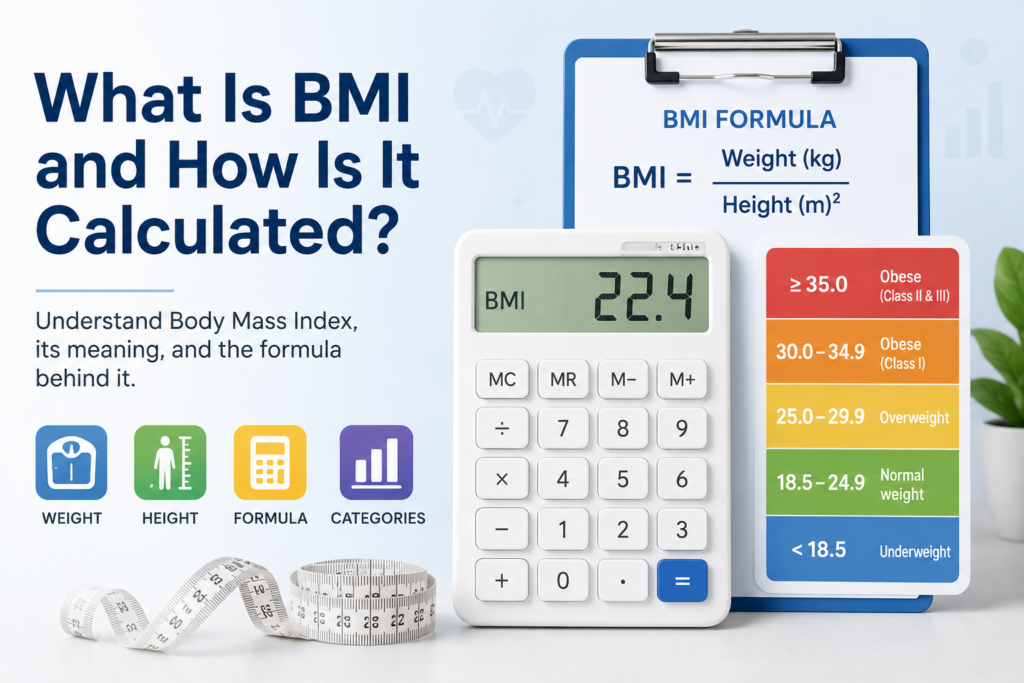
When people talk about health, fitness, or weight management, one term often appears everywhere: BMI. But many people still ask, “What Is BMI and How Is It Calculated?”
BMI, or Body Mass Index, is a simple measurement used to estimate whether a person’s weight falls within a healthy range based on their height. Doctors, fitness trainers, insurance providers, and health apps frequently use BMI as a quick screening tool.
While BMI does not directly measure body fat, it can help identify possible health risks related to being underweight, overweight, or obese. Understanding how BMI works can help you make smarter lifestyle decisions and better track your overall wellness goals.
In this guide, you will learn what BMI means, how it is calculated, why it matters, common mistakes people make, and the best tools to calculate it accurately.
Table of Contents
- What Is BMI?
- How Is BMI Calculated?
- BMI Categories Explained
- Why BMI Is Important
- Benefits of Using BMI
- Common Limitations of BMI
- Best Ways to Maintain a Healthy BMI
- Common BMI Mistakes to Avoid
- Best BMI Tools and Solutions
- Conclusion
What Is BMI?
BMI stands for Body Mass Index. It is a numerical value derived from a person’s weight and height.
Healthcare professionals use BMI to estimate whether a person has a healthy body weight for their height. The result places individuals into categories such as:
- Underweight
- Normal weight
- Overweight
- Obese
BMI is widely used because it is:
- Fast
- Easy to calculate
- Low-cost
- Useful for large populations
However, BMI is not a perfect measurement. It should be considered a general health screening tool rather than a complete diagnosis.
How Is BMI Calculated?
BMI is calculated using a simple mathematical formula.
BMI Formula (Metric)
BMI = weight (kg) ÷ height² (m²)BMI Formula (Imperial)
BMI = [weight (lb) × 703] ÷ height² (in²)Example of BMI Calculation
Suppose a person weighs 70 kilograms and has a height of 1.75 meters.
BMI = 70 ÷ (1.75 × 1.75)
BMI = 22.9
A BMI of 22.9 falls within the healthy weight category.
BMI Categories Explained
The World Health Organization (WHO) provides standard BMI classifications for adults.
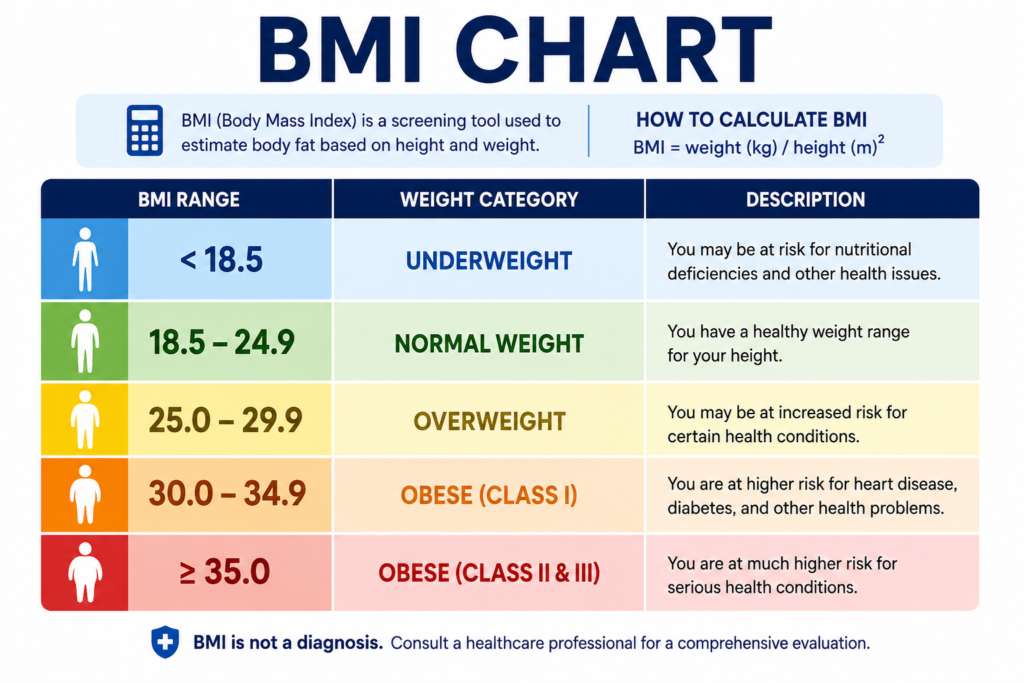
| BMI Range | Category |
|---|---|
| Below 18.5 | Underweight |
| 18.5 – 24.9 | Normal weight |
| 25 – 29.9 | Overweight |
| 30 – 34.9 | Obesity Class I |
| 35 – 39.9 | Obesity Class II |
| 40 and above | Severe obesity |
These ranges help healthcare professionals identify potential health risks.
Why BMI Is Important
BMI is important because it offers a quick overview of weight-related health risks.
People with very high or very low BMI values may face increased risks for several health conditions.
Health Risks Linked to High BMI
A high BMI may increase the likelihood of:
- Heart disease
- High blood pressure
- Type 2 diabetes
- Sleep apnea
- Joint problems
- Stroke
Health Risks Linked to Low BMI
Being underweight can also create health concerns such as:
- Weak immune system
- Nutritional deficiencies
- Bone loss
- Fatigue
- Fertility problems
Healthcare providers often use BMI as an early warning indicator before recommending additional tests.
Benefits of Using BMI
BMI remains popular because it offers several practical advantages.
Simple and Quick
You only need height and weight measurements to calculate BMI.
Useful for Population Studies
Governments and health organizations use BMI to study obesity trends and public health data.
Helps Track Weight Goals
BMI can help individuals monitor progress during:
- Weight loss programs
- Fitness journeys
- Lifestyle changes
Easy to Access
Most BMI calculators are free online and available on mobile apps.
Common Limitations of BMI
Although BMI is useful, it has limitations that people should understand.
BMI Does Not Measure Body Fat Directly
Two people can have the same BMI but very different body compositions.
For example:
- An athlete with high muscle mass may have a high BMI without excess fat.
- Another person with low muscle mass may have a “normal” BMI but higher body fat.
Age and Gender Differences
BMI does not fully account for:
- Age
- Gender
- Ethnicity
- Muscle distribution
Not Ideal for Certain Groups
BMI may not provide accurate results for:
- Athletes
- Pregnant women
- Elderly adults
- Children
For children and teenagers, doctors often use age-based BMI percentiles instead.
Best Ways to Maintain a Healthy BMI
Maintaining a healthy BMI usually involves consistent lifestyle habits rather than extreme dieting.
Focus on Balanced Nutrition
A healthy eating plan should include:
- Fruits and vegetables
- Lean proteins
- Whole grains
- Healthy fats
- Adequate hydration
Avoid excessive intake of:
- Sugary drinks
- Processed foods
- Deep-fried snacks
Stay Physically Active
Regular exercise helps manage body weight and improve overall health.
Recommended activities include:
- Walking
- Running
- Cycling
- Strength training
- Swimming
Aim for at least 150 minutes of moderate physical activity per week.
Prioritize Sleep
Poor sleep habits can affect hormones linked to hunger and metabolism.
Adults generally need:
- 7–9 hours of sleep nightly
Manage Stress
Chronic stress can lead to unhealthy eating patterns and weight gain.
Helpful stress-management strategies include:
- Meditation
- Yoga
- Journaling
- Deep breathing
- Spending time outdoors
Common BMI Mistakes to Avoid
Many people misunderstand how BMI should be used.
Treating BMI as a Perfect Health Score
BMI is only one indicator of health. It should not replace professional medical advice.
Ignoring Muscle Mass
Athletes often panic after seeing a high BMI even though their body fat is low.
Using Incorrect Measurements
Small errors in height or weight can significantly affect BMI results.
Always:
- Use accurate scales
- Measure height correctly
- Update measurements regularly
Comparing Adults and Children Equally
Children use different BMI standards based on age and gender.
Best BMI Tools and Solutions
Today, many reliable tools can calculate BMI instantly.
| Tool | Best For | Key Features |
|---|---|---|
| Online BMI Calculators | Quick calculations | Instant results |
| Fitness Apps | Daily tracking | Weight monitoring |
| Smart Scales | Home use | Body composition data |
| Healthcare Platforms | Professional advice | Health analysis |
Features to Look for in a BMI Tool
The best BMI calculators usually include:
- Metric and imperial support
- BMI category explanations
- Weight recommendations
- Mobile-friendly design
- Privacy protection
For website owners, adding a BMI calculator can also increase user engagement and SEO traffic.
Is BMI Still Relevant Today?
Despite criticism, BMI remains one of the most widely used health screening tools worldwide.
Many experts now recommend combining BMI with other measurements such as:
- Waist circumference
- Body fat percentage
- Blood pressure
- Cholesterol levels
This provides a more complete picture of overall health.
BMI works best as a starting point rather than a final diagnosis.
Conclusion
So, what is BMI and how is it calculated?
BMI, or Body Mass Index, is a simple formula that compares your weight and height to estimate whether your body weight falls within a healthy range. It is easy to calculate, widely used, and helpful for identifying possible health risks.
Although BMI has limitations, it remains a useful screening tool when combined with healthy lifestyle habits and professional medical guidance.
The most important thing to remember is that health is more than a number. A balanced diet, regular exercise, quality sleep, and consistent habits matter far more in the long run than chasing a perfect BMI score.
Suggested Internal Linking Opportunities
- BMI Chart for Men and Women
- Best Free Online Health Calculators
- Healthy Weight Loss Tips for Beginners
Suggested External Authority Sources
Suggested Image Ideas
1. BMI Chart Graphic
Alt Text: What Is BMI and How Is It Calculated BMI chart for adults
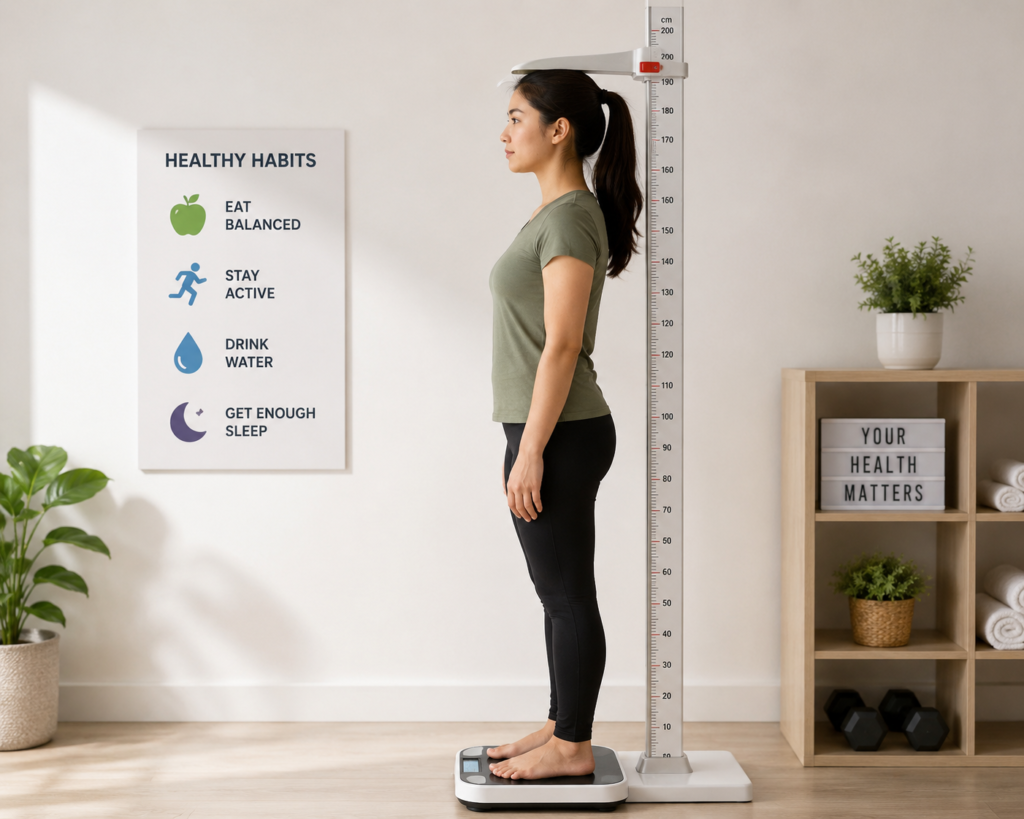
2. Person Measuring Weight and Height
Alt Text: What Is BMI and How Is It Calculated health measurement example
3. Online BMI Calculator Screenshot
Alt Text: What Is BMI and How Is It Calculated using an online calculator
Source reference from uploaded draft:
If you liked our blog you can connect by our social profile :
Follow us for real estate tips, tools, and updates